Form before color
A family changes how the object is built. Within each family, bodies, ears, openings, paws, suspended forms, or framing structures change too. A palette supports the sculpture.
Sixty cats, built around eight families of form. Each has pointed ears, a quiet face, a raised paw, and a small token. The material and construction can change; the little good-luck gesture stays.
The research begins with the ceramic maneki-neko tradition, then studies how artists think about surface, space, movement, and color.
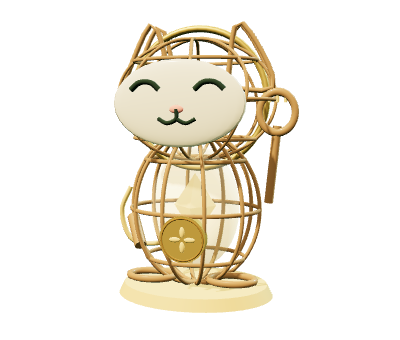
A family changes how the object is built. Within each family, bodies, ears, openings, paws, suspended forms, or framing structures change too. A palette supports the sculpture.
Every cat has a stable number, a name, material notes, and a visible unlock requirement. Choose exactly which cat to collect. Six milestone pieces reward sustained practice.
Inspect a piece, turn it on the desk, or pin it for later. Collection tiers describe the design, while actual ownership and unlock progress appear in words. Motion can be reduced.
These sources inform broad design principles. The cats are original procedural 3D objects, with their own forms and names. The catalog contains six Originals, forty-eight family studies, and six Milestone Pieces. Studies, Studio, and Signature are design tiers; all unlock paths are visible.