Power / Who gets to decide?
What ambition costs.
Begin with the real financial worlds of Den of Thieves and Barbarians at the Gate. Then shift into the invented empire of Mistborn. Notice how each book makes power visible.
Books / Twenty open doors
A small shelf that keeps growing.
Find a copy. Find a question.
Read at your own pace.
01 / The bookshop
Nineteen books, one interview and essay room.
Original art, useful editions and reading routes.
All 20 reading doors shown.
A novel / 1922
A life in search of itself. Compare translations, follow the river, find a copy.
Open the companion
Reported nonfiction / 1991
Inside the ambition and financial crime of 1980s Wall Street. Read the record closely.
Open the companion
A novel / 2007
American football, a second chance and life in Parma. A different sort of Grisham.
Open the companion
Reported business history / 1990
A reported corporate drama about the contest for RJR Nabisco. Follow the people before the numbers.
Open the companion
Ideas & economic argument / 1998
Kevin Kelly’s 1998 argument about connected systems. Read its proposals in their moment, then test the questions they leave.
Open the companion
A novella / 1911
Edith Wharton’s compressed story of desire and constraint. Attend to the weather, the rooms and the distance between telling and knowing.
Open the companion
An adventure novel / 1883
A voyage, a dangerous company and a young narrator learning to judge people. Follow the voices as closely as the map.
Open the companion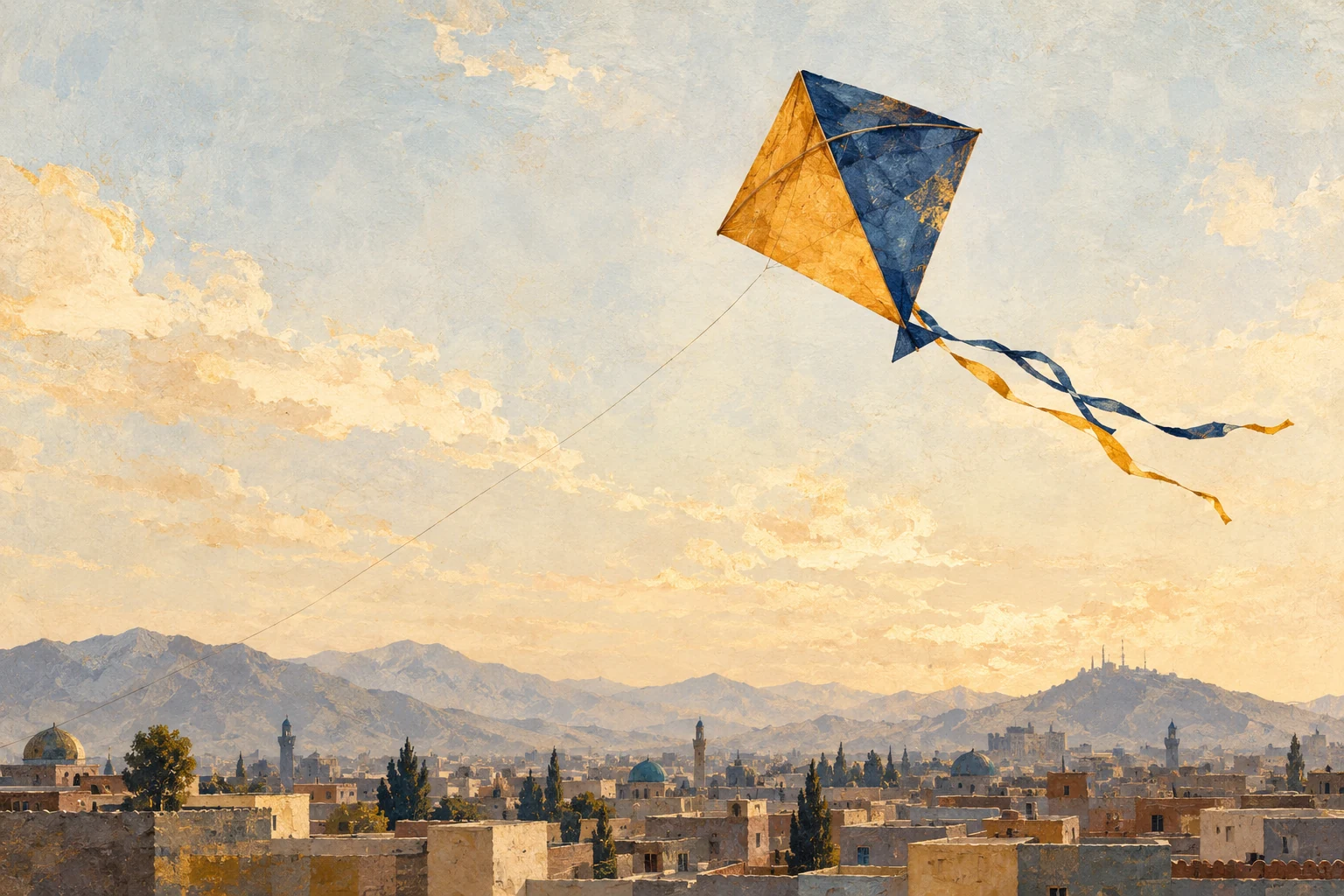
A novel / 2003
Khaled Hosseini’s novel of friendship, memory and responsibility across a changing Afghanistan and a life abroad.
Open the companion
Epic fantasy / 2006
Begin Sanderson’s Mistborn sequence with its first novel: a crew, a dangerous plan and a world whose rules matter.
Open the companion
Autobiographical trading account and argument about decision-making under loss / 1994
Paul and Moynihan revisit a trader's experience of a large loss and ask how confidence, attachment and judgment interact. Read the personal account beside the authors' explanations, keeping the difference between a vivid case and a general claim in view.
Open the companion
Novel; heroic historical fiction drawing on the Troy tradition / 2006
The coast is a meeting place for travellers, warriors and uneasy alliances. As conflict gathers around Troy, Gemmell asks what courage and loyalty might mean to people caught inside a legend. This is the second part of a continuing story: begin with Lord of the Silver Bow, then arrive here with its relationships still in mind.
Open the companion
Popular nonfiction about English word histories and connections / 2011
One familiar word opens a door into another. Forsyth follows unexpected connections through English, turning vocabulary into a trail of small discoveries. Read for the pleasure of being carried somewhere you did not expect, then choose a few word histories to explore more closely.
Open the companion
Popular nonfiction about unusual and historical vocabulary / 2012
A day becomes a way of finding words. Forsyth moves from waking toward bedtime, gathering unusual vocabulary around familiar activities. Read it beside your own routines: the pleasure lies in discovering that a feeling or small habit you thought unnamed has a linguistic companion.
Open the companion
Popular nonfiction about habits and personal change / 2018
Clear organizes everyday behavior into a practical account of small changes, surroundings and repeated choices. Read one proposal at a time, asking what conditions make it useful and where a memorable rule needs qualification.
Open the companion
Interview and essay reading room / Not verified
The name on a cover can identify a subject without identifying an author. This historical interview edition points toward a conversation with Paul Graham about startups. Begin with the original interview and his official essays, keeping their dates and publication roles visible.
Open the companion
Historical motivational nonfiction / 1937
Hill’s 1937 book turns desire, persistence and organized effort into a program of personal achievement. Practical suggestions about planning sit beside claims about faith, autosuggestion and the powers of the mind. Read the confidence of its voice closely, and keep a separate place for questions about its evidence.
Open the companion
Historical motivational nonfiction / 1928
Hill’s extended course puts personal achievement into a sequence of lessons. Definite aims, effort and cooperation share space with a philosophy of mental power. Read it at the scale of a course: one lesson, a few notes, and enough distance to question the claims before accepting them.
Open the companion
Historical motivational nonfiction / 1903
A brief sequence of meditations asks what repeated thoughts do to character, purpose and daily conduct. Allen writes through images of cultivation: the mind as a place to tend, the life as something that takes shape over time. Read it as an encounter with an influential historical voice, leaving room to question how far its claims can reach.
Open the companion
Historical motivational nonfiction / 1910
Seventeen short chapters connect purposeful action, gratitude and imagined possibility to a spiritual theory of prosperity. Wattles asks readers to think creatively rather than competitively. The interest today lies partly in watching how an early twentieth-century writer gives conviction the language of a method—and where that confidence asks more of the evidence than the text provides.
Open the companion
Autobiographical sports memoir; young-adult nonfiction with an explicit Christian perspective / 2004
Before it is a comeback story, this is a surfer's account of a life organized around the water. Hamilton writes about injury, family, Christian faith and the practical work of returning to a sport she loves. Read for her particular voice and experience, noticing the people and adjustments that make participation possible.
Open the companionNo books match this search and theme. Clear the filters to begin again.
An atlas of reading / 87 title records
Follow a path through imagined worlds, money, memory, language and ideas. A reviewed Goodreads snapshot becomes an editorial map; title records link to their catalog, while selected works open into full companions.
02 / Across the shelf
Our editorial connections.
A route, rather than a ranking.
Power / Who gets to decide?
Begin with the real financial worlds of Den of Thieves and Barbarians at the Gate. Then shift into the invented empire of Mistborn. Notice how each book makes power visible.
Place / What makes a life?
Carry one question from the winter landscape of Ethan Frome into the memories of The Kite Runner and the river of Siddhartha: how does a place change what a person can imagine?
03 / Another kind of room
Elsewhere in PointCast: a literary tribute.

A literary tribute
A quieter room for the work, the voice and the contradictions. An existing PointCast tribute, with its own reading paths.
Enter the room